Overview
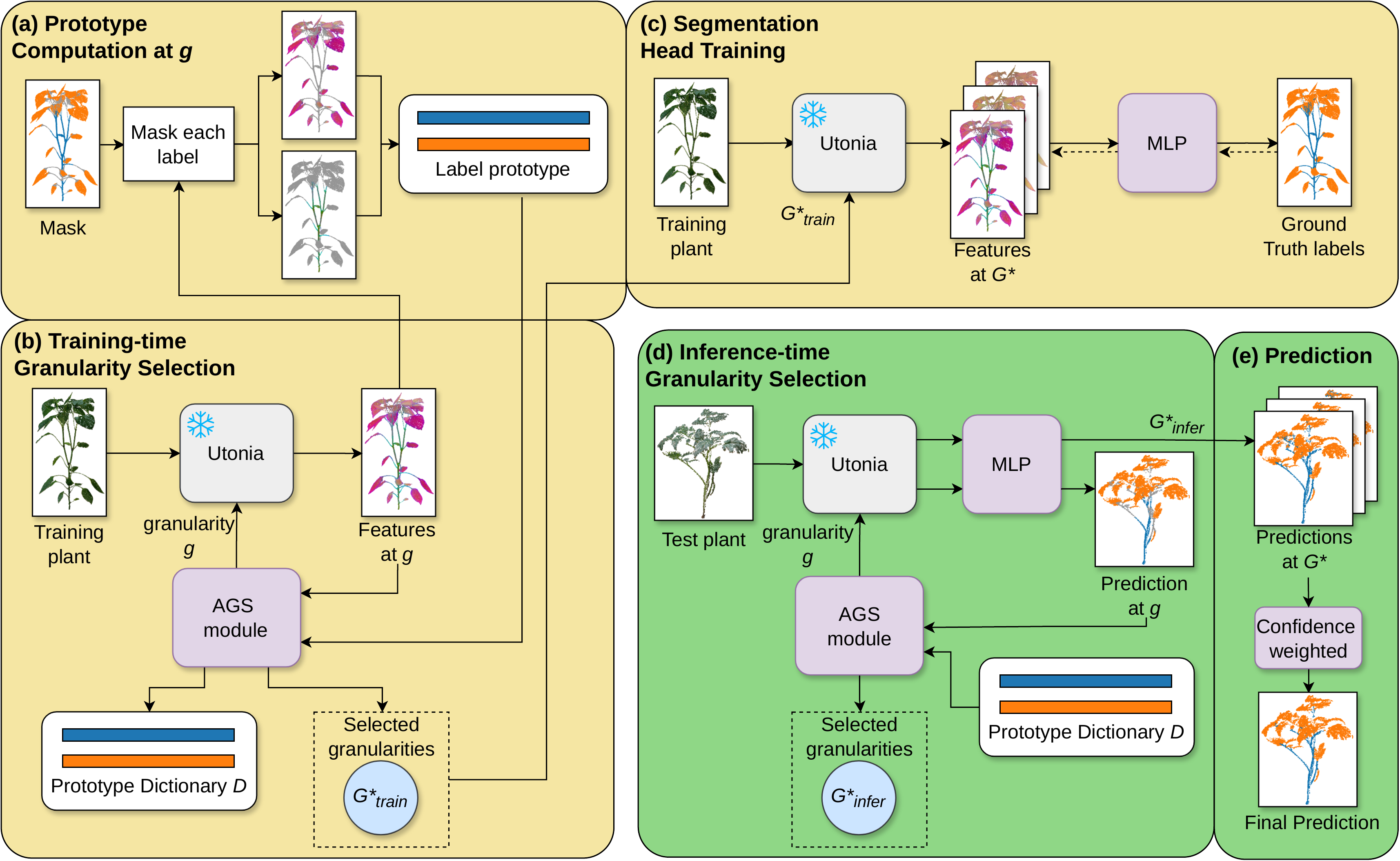
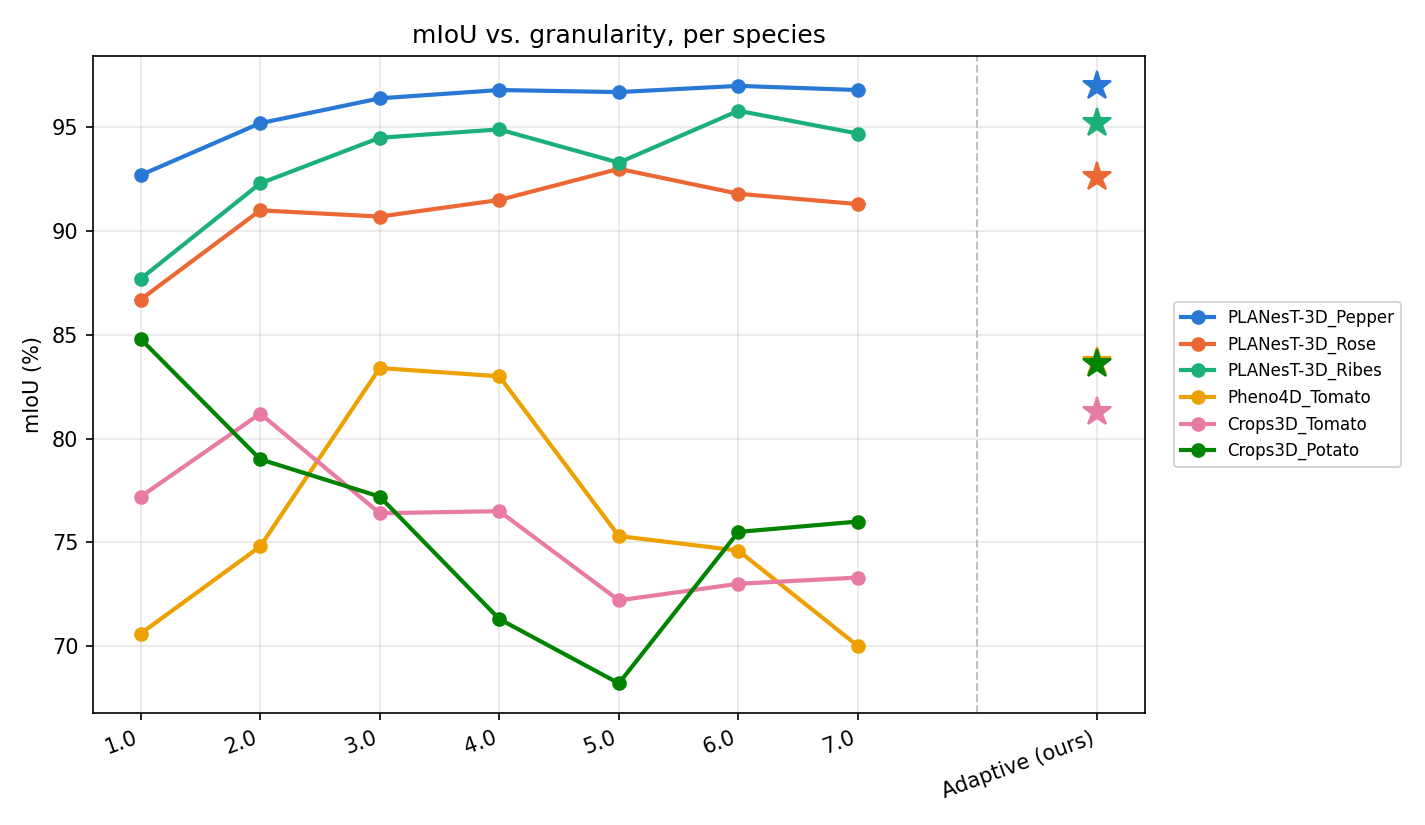
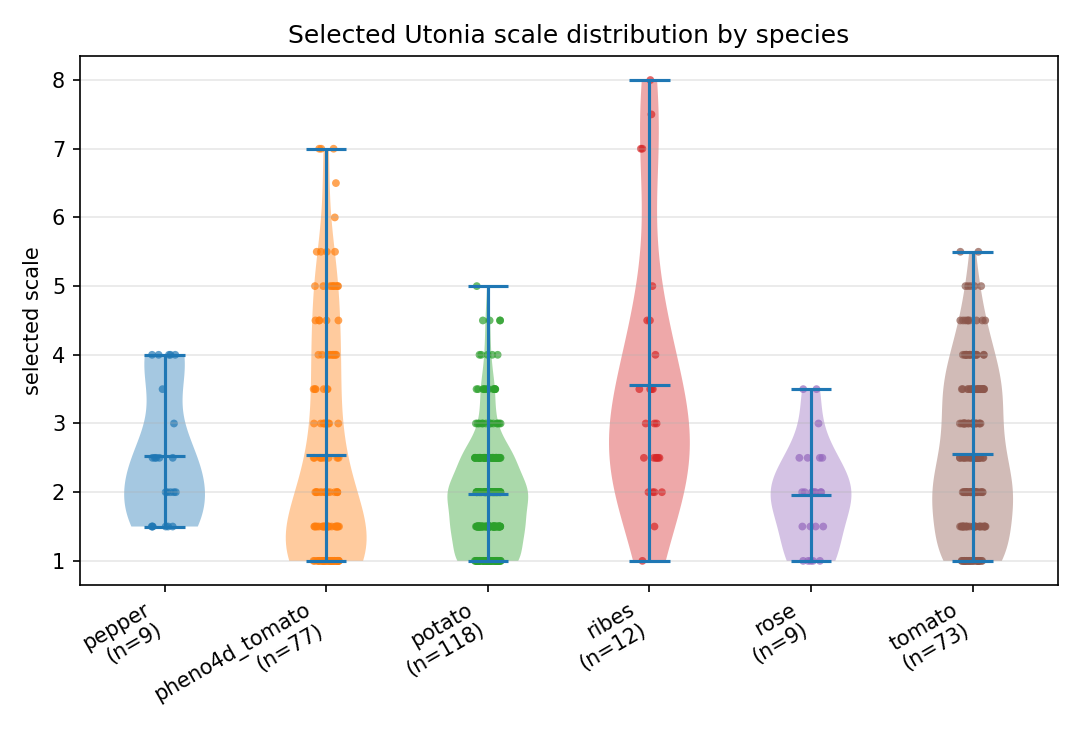
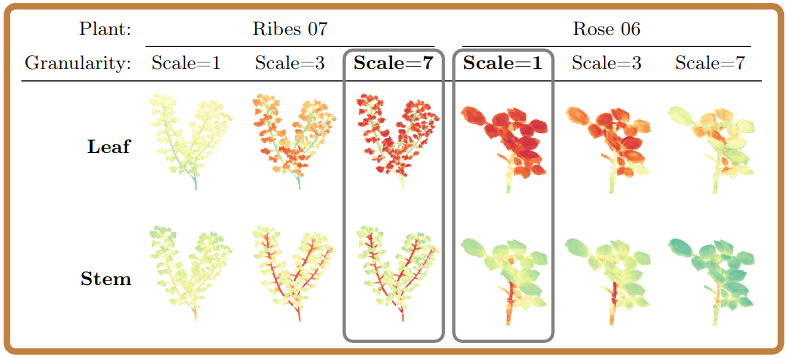
A single fixed spatial granularity rarely suits every plant. AGS-PlantSeg adapts granularity per plant instead, trained only on PLANesT-3D and evaluated for cross-species, cross-dataset generalization on Pheno4D and Crops3D.
1
Frozen Utonia features
Point features come from a frozen Utonia encoder at multiple granularities; only a lightweight two-layer MLP head is trained.
→
2
Adaptive selection (AGS)
Per plant, pick 3 granularity levels: training uses prototype scores (inter-class separation, intra-class compactness, boundary consistency); inference uses similarity to stored prototypes.
→
3
Confidence-weighted aggregation
Combine the 3 levels' predictions into the final per-point organ label (e.g. stem, leaf).