AgriField-40K

AgriField-40K: Adapting Vision Models to Agriculture With Efficient Continual Pretraining

1 Technical University of Denmark (DTU)    2 Pioneer Centre for Artificial Intelligence
* Corresponding author
European Conference on Computer Vision (ECCV) Workshops 2026

Abstract

Field-based agricultural computer vision is important for precision agriculture, yet it largely depends on expensive annotations and costly adaptation of large pretrained models. We introduce AgriField-40K, a field-centric dataset curated from 17 public resources and covering diverse crops, weeds, and field conditions. Building on this, we present AgriMAE, a parameter-efficient continual pretraining baseline that adapts a masked autoencoder pretrained on natural images by training only lightweight adapters. We further explore semantic feature reconstruction as an alternative pretraining objective and evaluate transfer across multiple tasks. AgriMAE consistently improves downstream performance and can match or even outperform full fine-tuning while using up to 9× fewer trainable parameters, showing that AgriField-40K is a practical resource for continual pretraining in agricultural vision.

~40K
field images
17
public source datasets
fewer trainable params vs. full FT
4
downstream tasks evaluated

Overview

Vision models pretrained on natural images transfer poorly to agricultural fields, where repeated plant structures, occlusion, and shifting illumination, growth stage, and acquisition platform create a real domain gap. Fully adapting a large backbone to close this gap is expensive and risks overfitting on limited field data. We tackle this with two contributions: AgriField-40K, a unified field-centric pretraining corpus, and AgriMAE, which closes the gap by training only lightweight adapters and keeping the pretrained backbone frozen throughout continual pretraining and downstream adaptation alike.

1
Pretrain
Start from an MAE pretrained on natural images (ImageNet).
2
Continually pretrain
Train only adapters on AgriField-40K, pixel or feature reconstruction, backbone frozen.
3
Adapt downstream
Fine-tune adapters + task heads for classification, segmentation, detection.

Contributions

AgriField-40K Dataset

To support the systematic study of efficient continual pretraining, we introduce AgriField-40K, a field-centric agricultural dataset for representation learning, built from 17 public resources into a unified corpus of ~40,000 curated RGB images. Unlike leaf-level or species-ID datasets, it focuses on real field conditions (i.e., crop/weed mixtures, dense canopies, soil backgrounds, and multiple growth stages) captured with handheld cameras, robots, drones, and shrouded platforms.
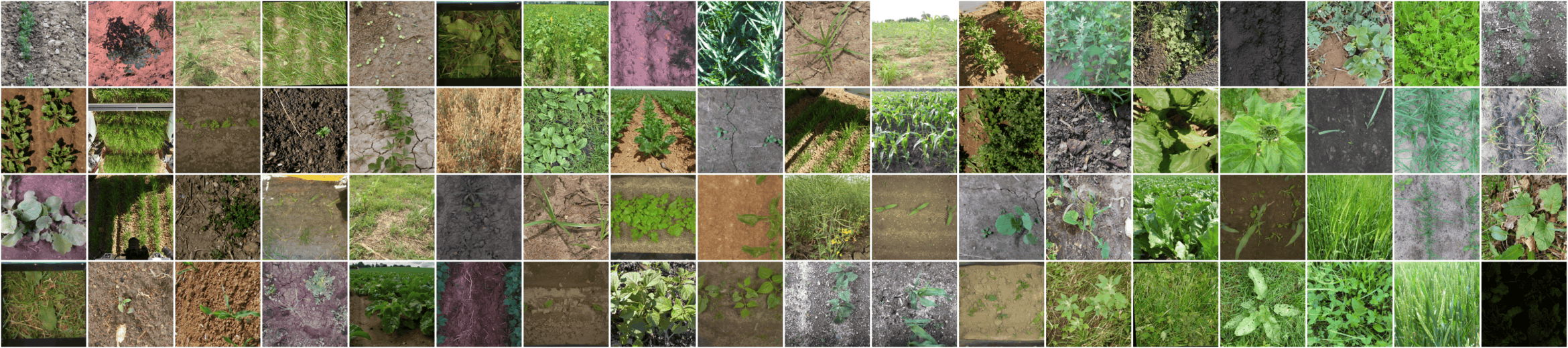
Grid of sample images from AgriField-40K showing diverse crops, weeds, and field conditions
Sample images from AgriField-40K showing diverse crops, weeds, and field conditions.

We discard the original annotations and keep only RGB images, apply fixed-interval sampling to remove near-duplicate frames from video/robot sources, and manually filter low-quality images. Each image is resized and center-cropped to 512×512 using Lanczos interpolation. The dataset is split 80/20 for training and validation, and is released under CC BY-SA 4.0.

DatasetYearLicenseRetainedDomainTask
MuST-C2026CC BY 4.07,242Sugar Beet, Soybean, Potato, Maize, Wheat
PhenoBench2026CC BY-SA 4.09,606Sugar Beet & 6 WeedsSegmentation
LUCASVision2023CC BY 4.011,19512 CropsClassification
VegAnn2022CC BY 1.01,60726+ CropsSegmentation
WE3DS2023CC BY 4.01,5537 Crops & 10 WeedsSegmentation
… 12 more sources
AgriField-40K2026CC BY-SA 4.039,963Field-CentricPretraining

Full breakdown of all 17 sources, licenses, and original vs. retained sizes is in the paper (Table 1).
Method

Large-scale pretraining gives vision models strong general-purpose features, but these models are typically pretrained on natural images like ImageNet. Agricultural field imagery looks quite different, with repeated plant structures, fine-grained crop/weed distinctions, occlusion, and large swings in illumination, growth stage, and acquisition platform, creating a domain gap that limits transfer to real field tasks. The natural fix is continual pretraining on in-domain data, but fully updating a large model can be costly, making parameter-efficient adaptation especially valuable when labelled data and compute are limited.

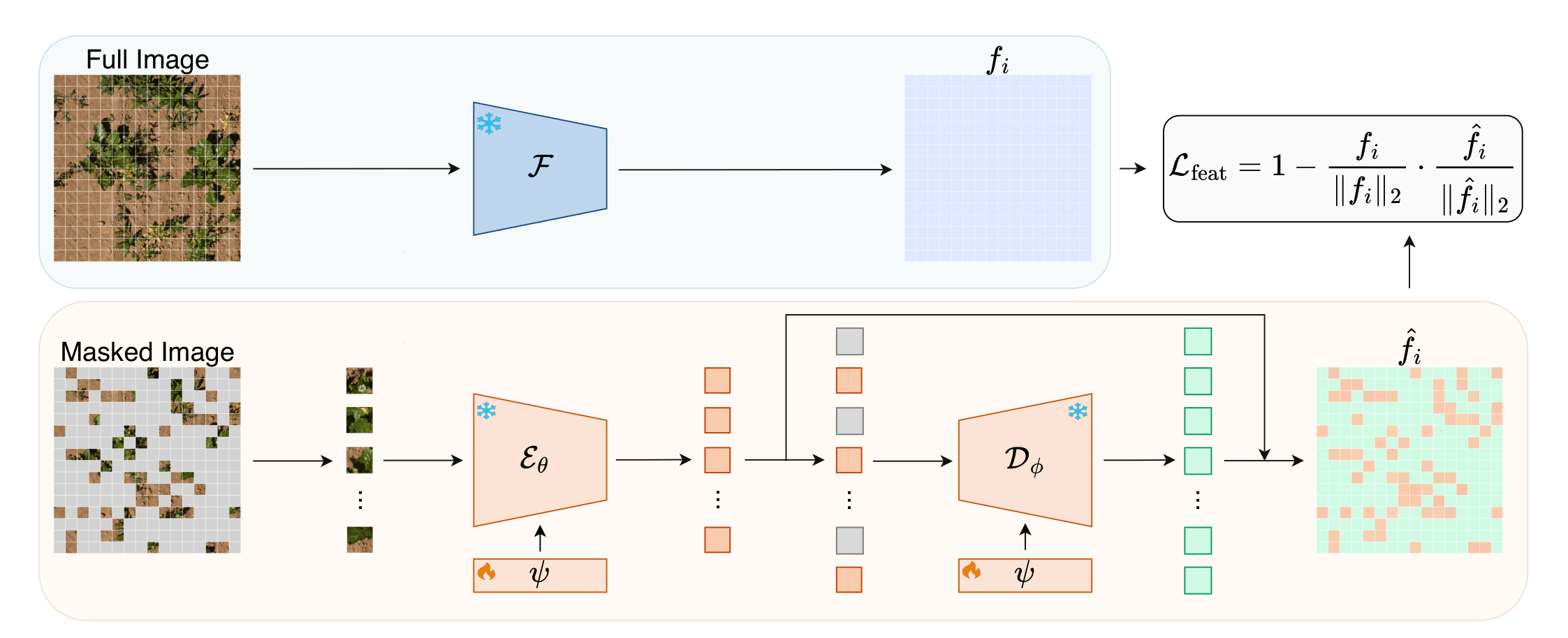
AgriMAE architecture with semantic feature reconstruction
Overview of AgriMAE with semantic feature reconstruction. An ImageNet-pretrained MAE encoder–decoder is adapted with lightweight adapter modules on AgriField-40K to predict patch-level features from a frozen feature extractor, with the loss computed over both masked and visible patches.

To keep the study controlled, we build on masked image modelling and establish a strong parameter-efficient baseline for continual pretraining. Our approach, AgriMAE, starts with an ImageNet pretrained MAE and continually pretrains it on AgriField-40K to adapt it to the agricultural field domain, while keeping the original encoder and decoder frozen. Only small adapters inserted into each transformer block are trained, both during this continual pretraining stage and the later downstream supervised fine tuning stage. This keeps adaptation cheap: a single consumer GPU is enough, and the majority of the model's parameters remain frozen.

Standard masked image modelling reconstructs pixels, which is simple and effective but provides limited semantic supervision. As an alternative, we reconstruct dense features from a strong, frozen feature extractor computed across the whole image rather than just the masked patches. This pushes the adapters to recover semantic structure rather than low-level pixel detail, which matters for field imagery where crop, weed, and background are often spread across the whole scene.

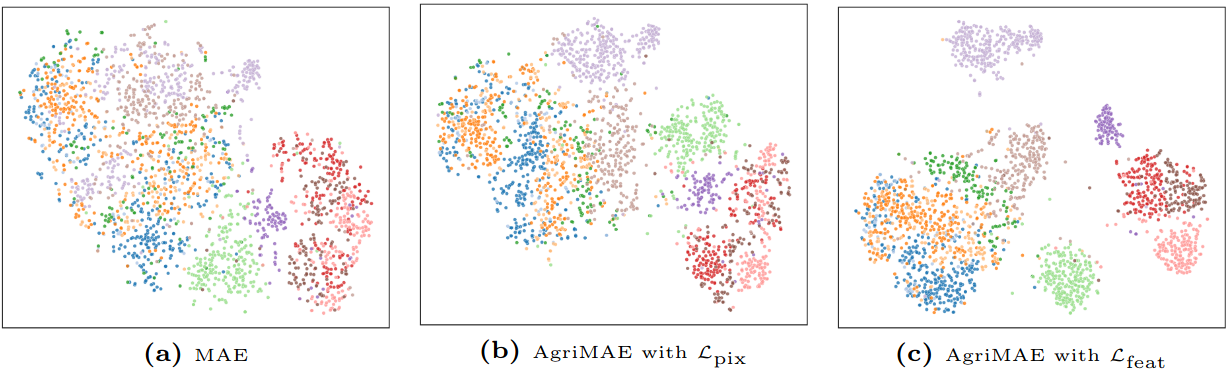
t-SNE visualization of feature representations from MAE and AgriMAE models with different pretraining objectives
t-SNE visualization of feature representations from different pretraining methods, extracted from the final layer using images from the LUCASVision subset of the AgriField-40K validation split.

Results

We provide downstream validation showing that our continual pretraining strategy consistently improves performance in parameter-efficient settings across classification, segmentation, and detection. AgriMAE can match or even outperform full fine-tuning while using substantially fewer trainable parameters. We hope AgriField-40K will support future research on efficient continual pretraining and practical agricultural vision applications.

GrowliFlower Segmentation

segmentation ground truth AgriMAE feature segmentation AgriMAE pixel segmentation MAE segmentation
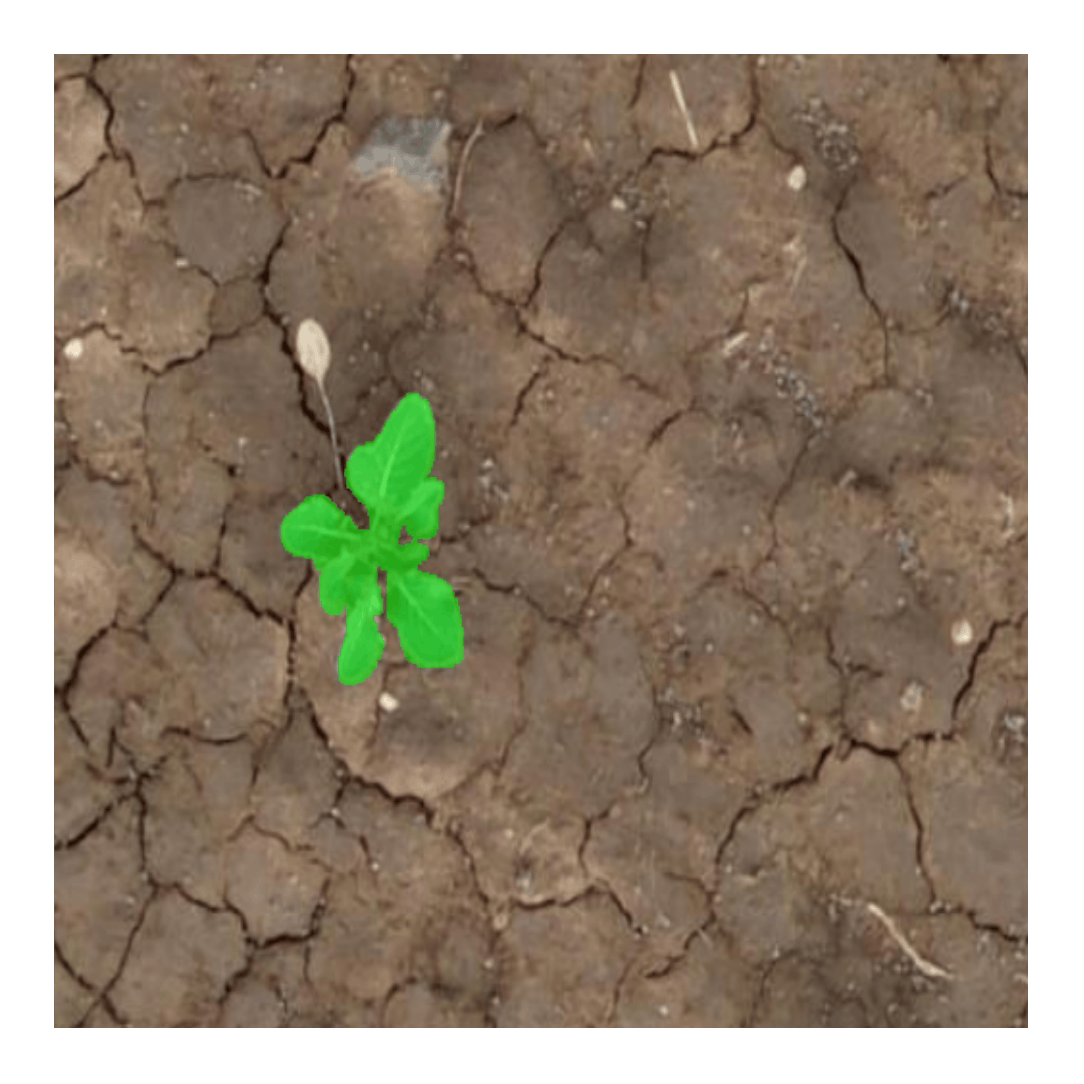
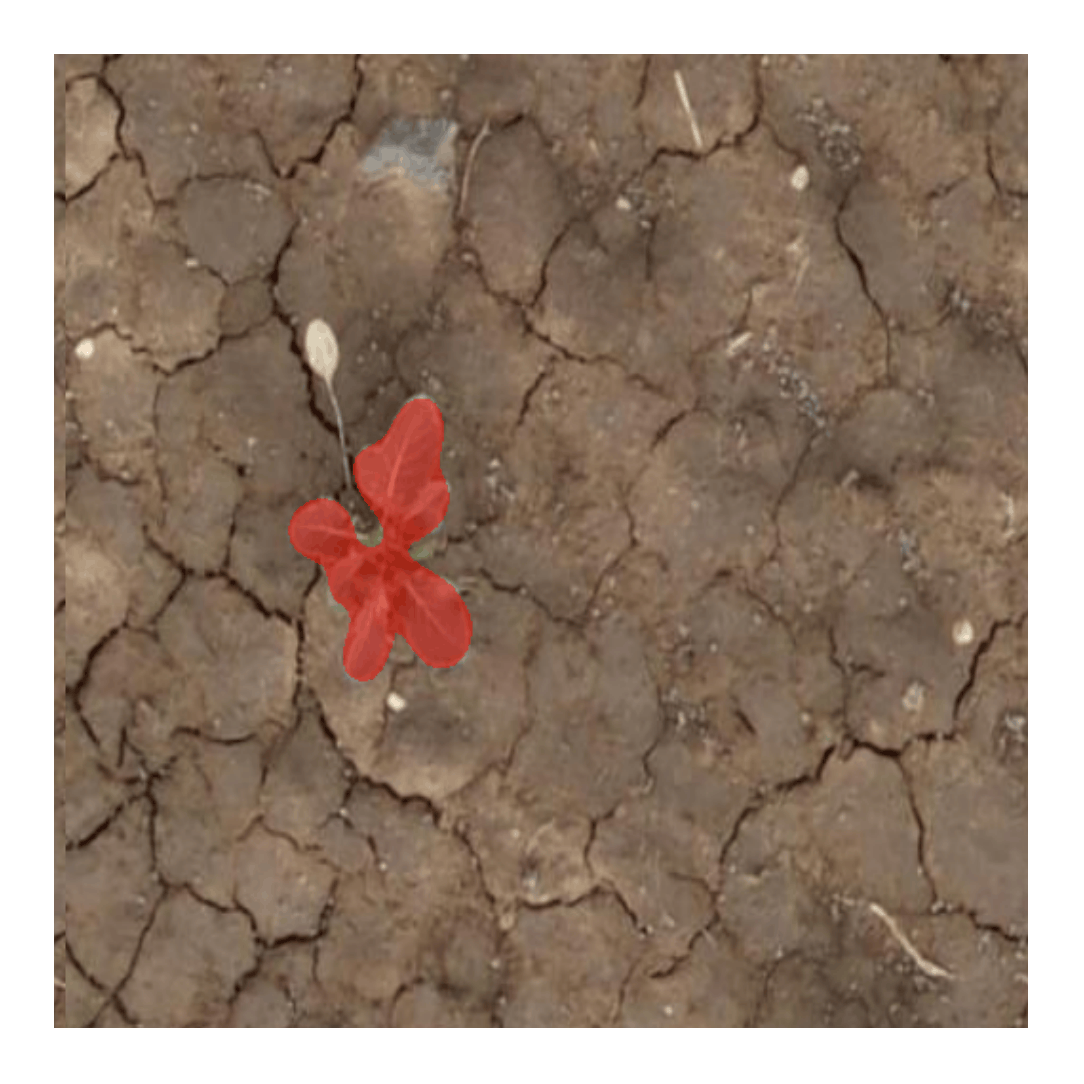
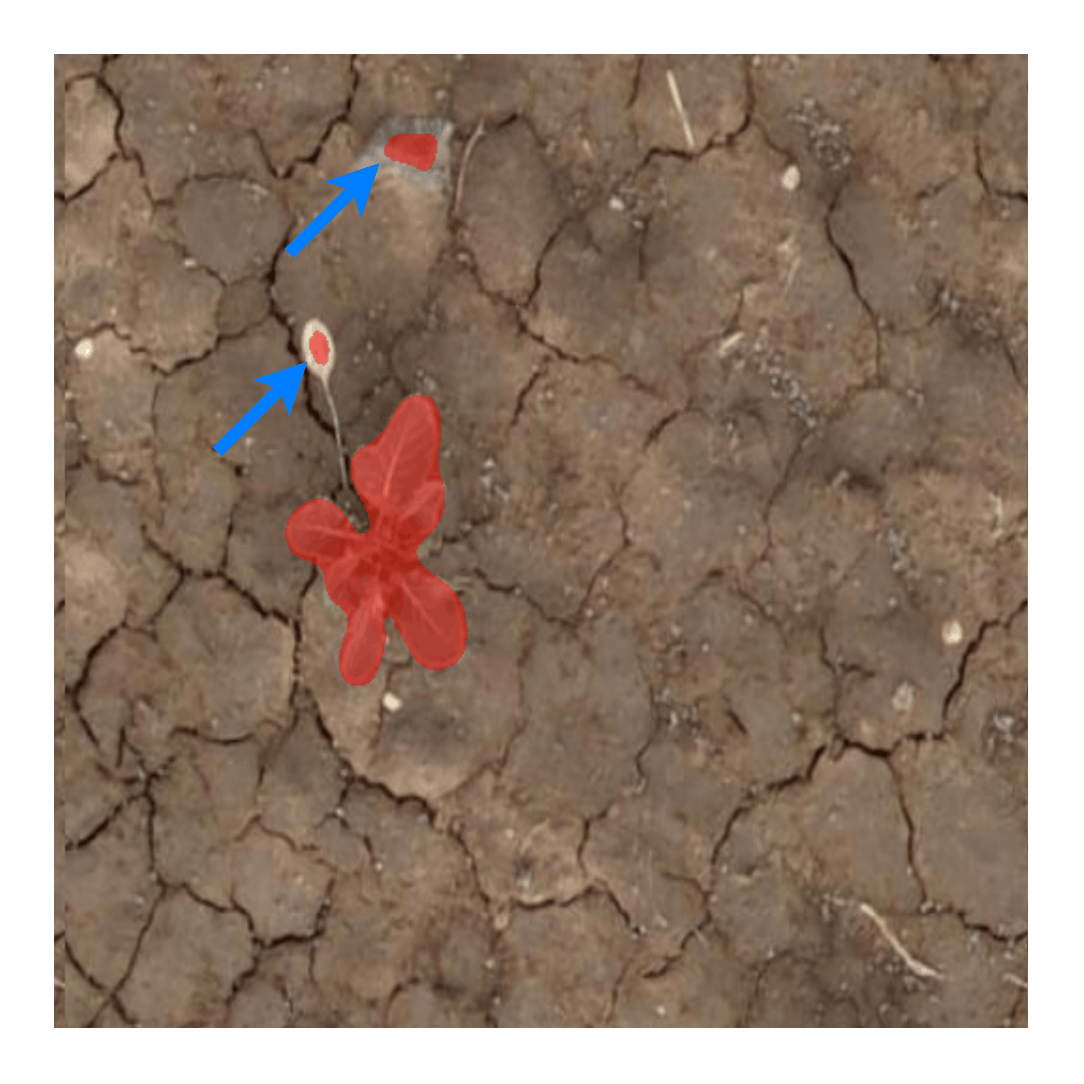
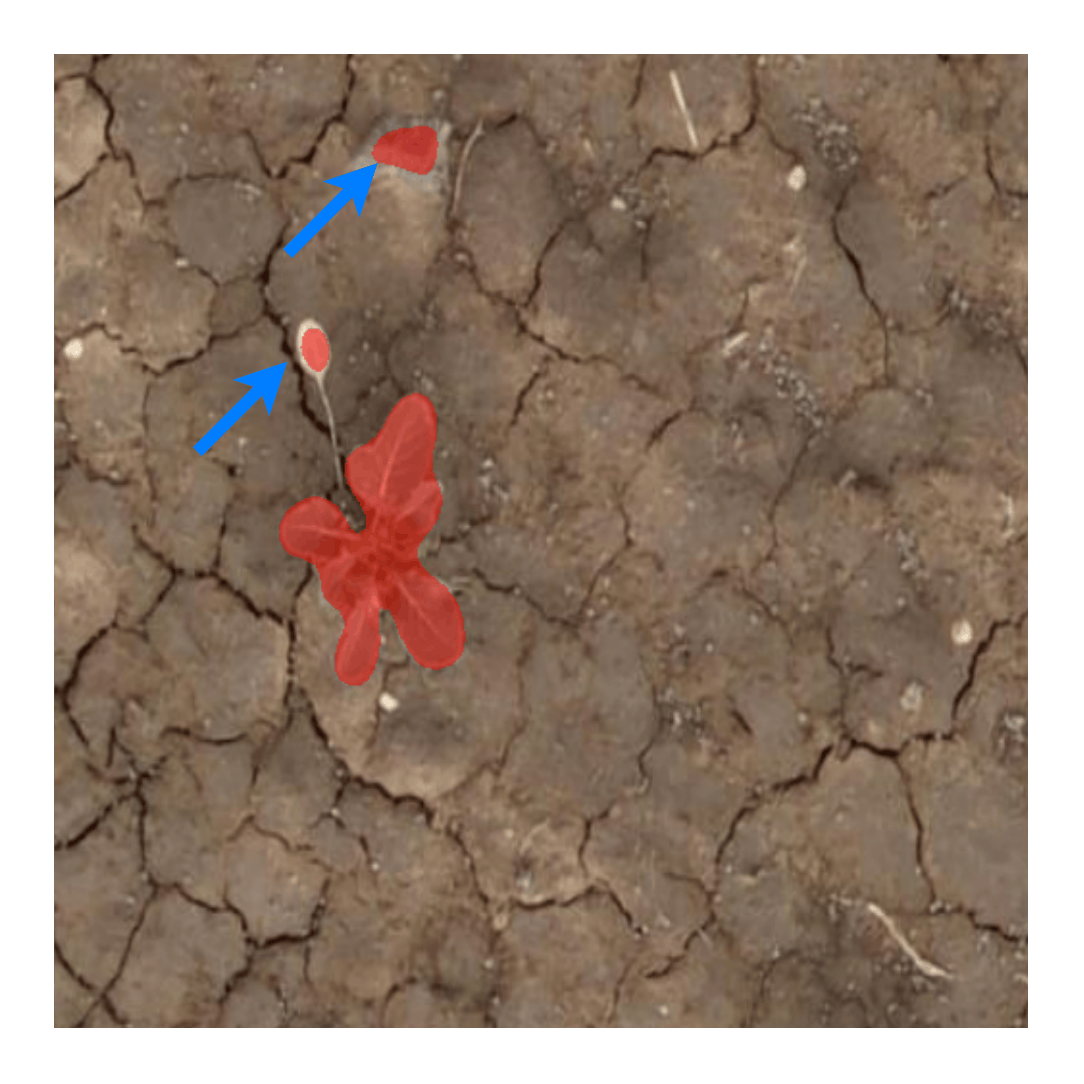
Left to right: ground truth · AgriMAE (feature) · AgriMAE (pixel) · MAE

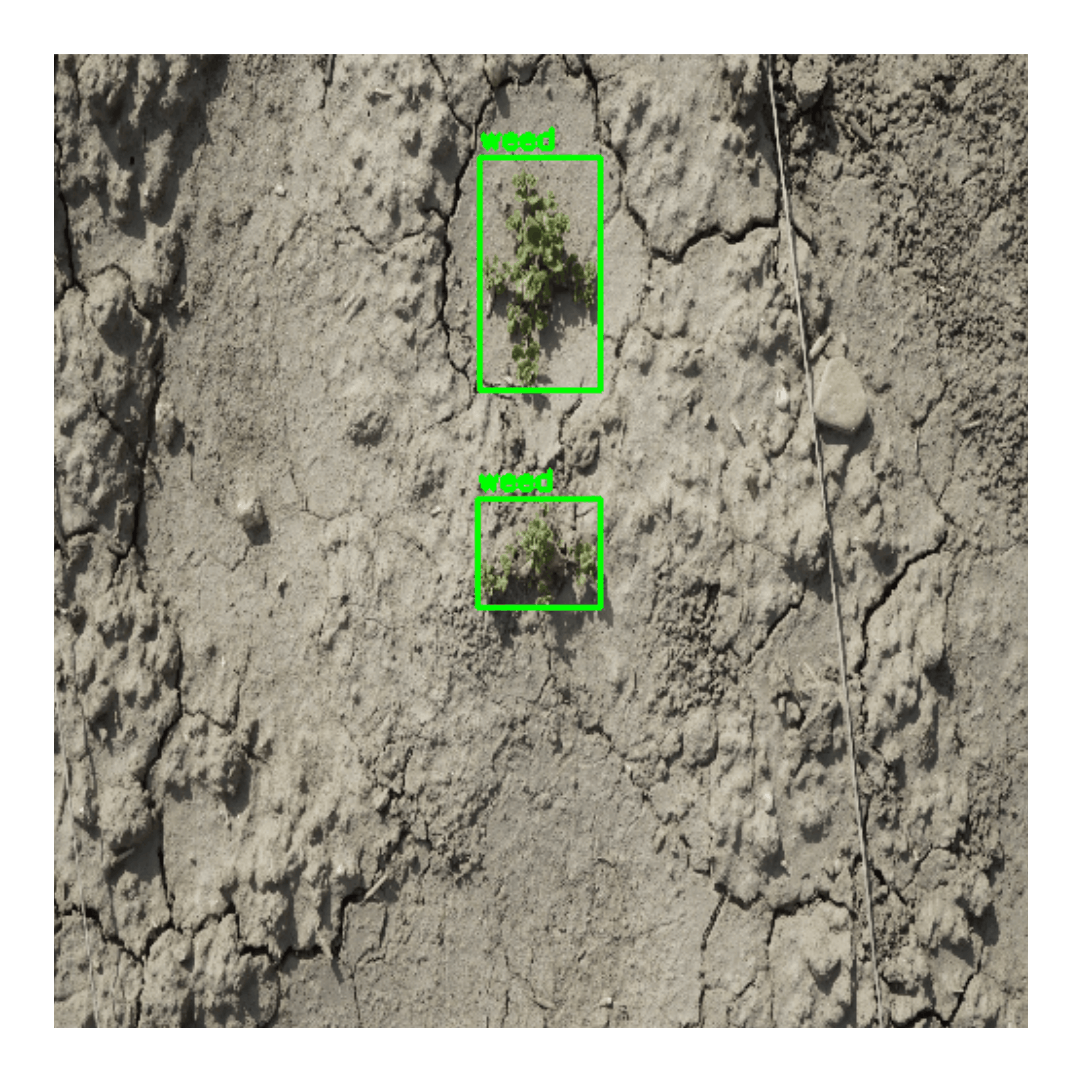
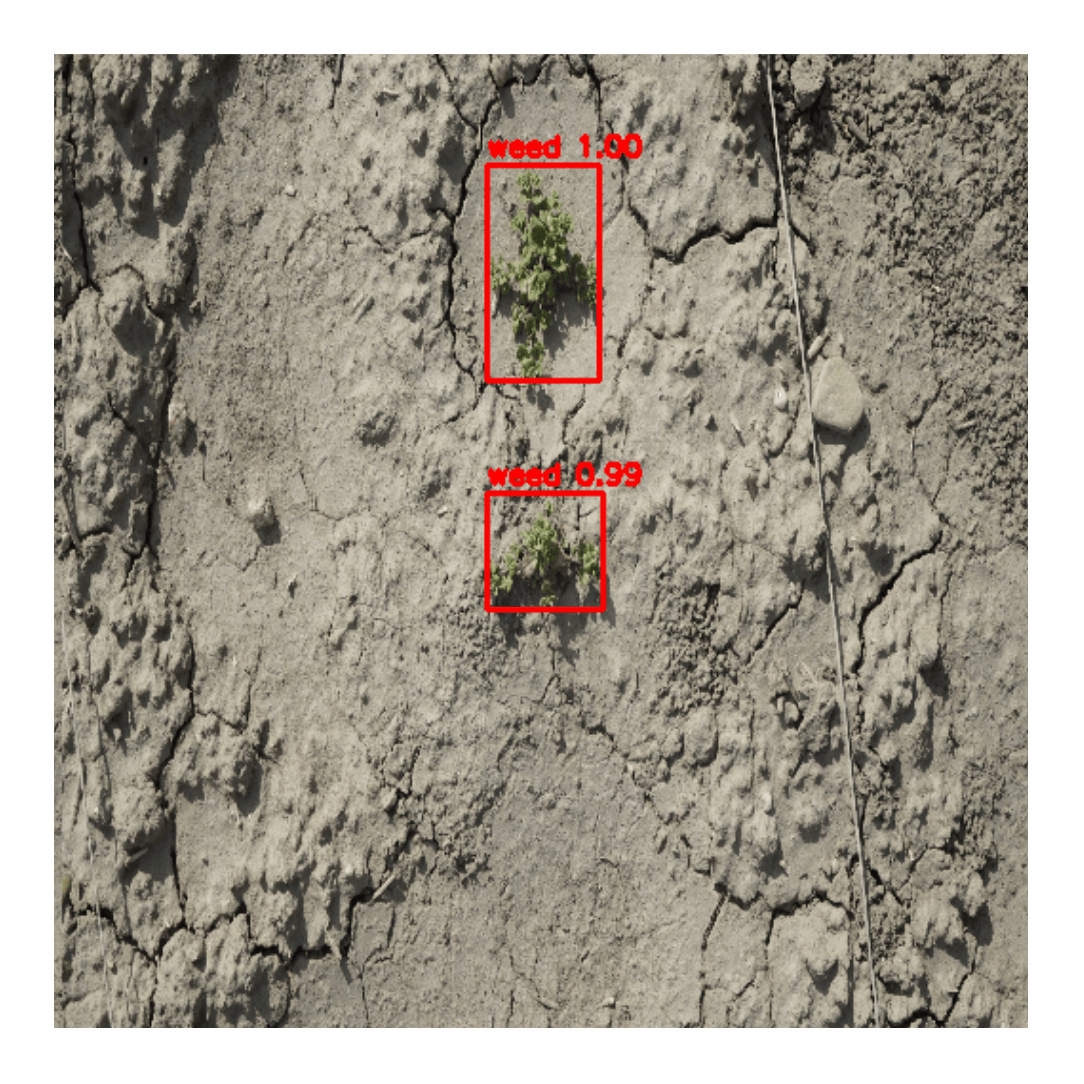
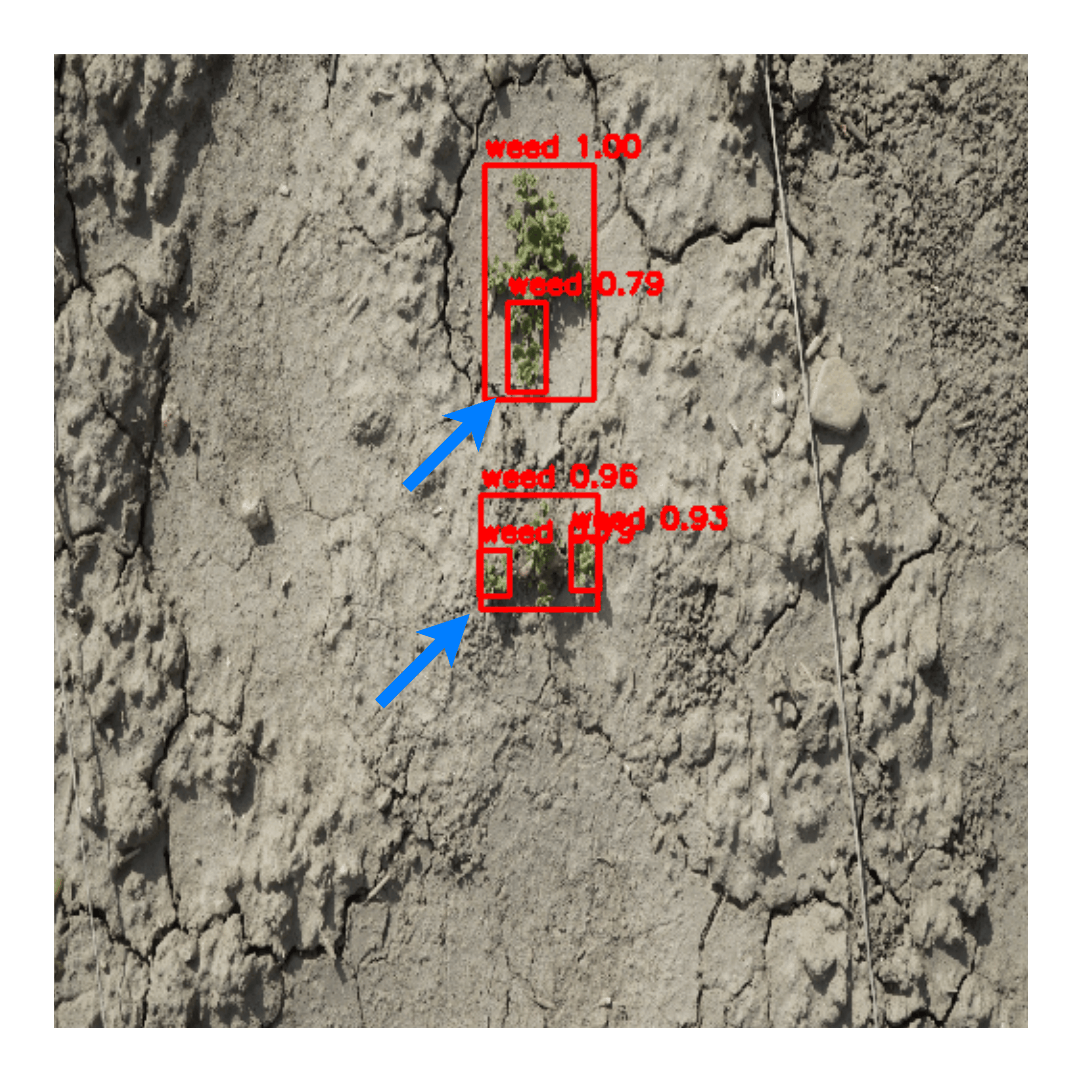
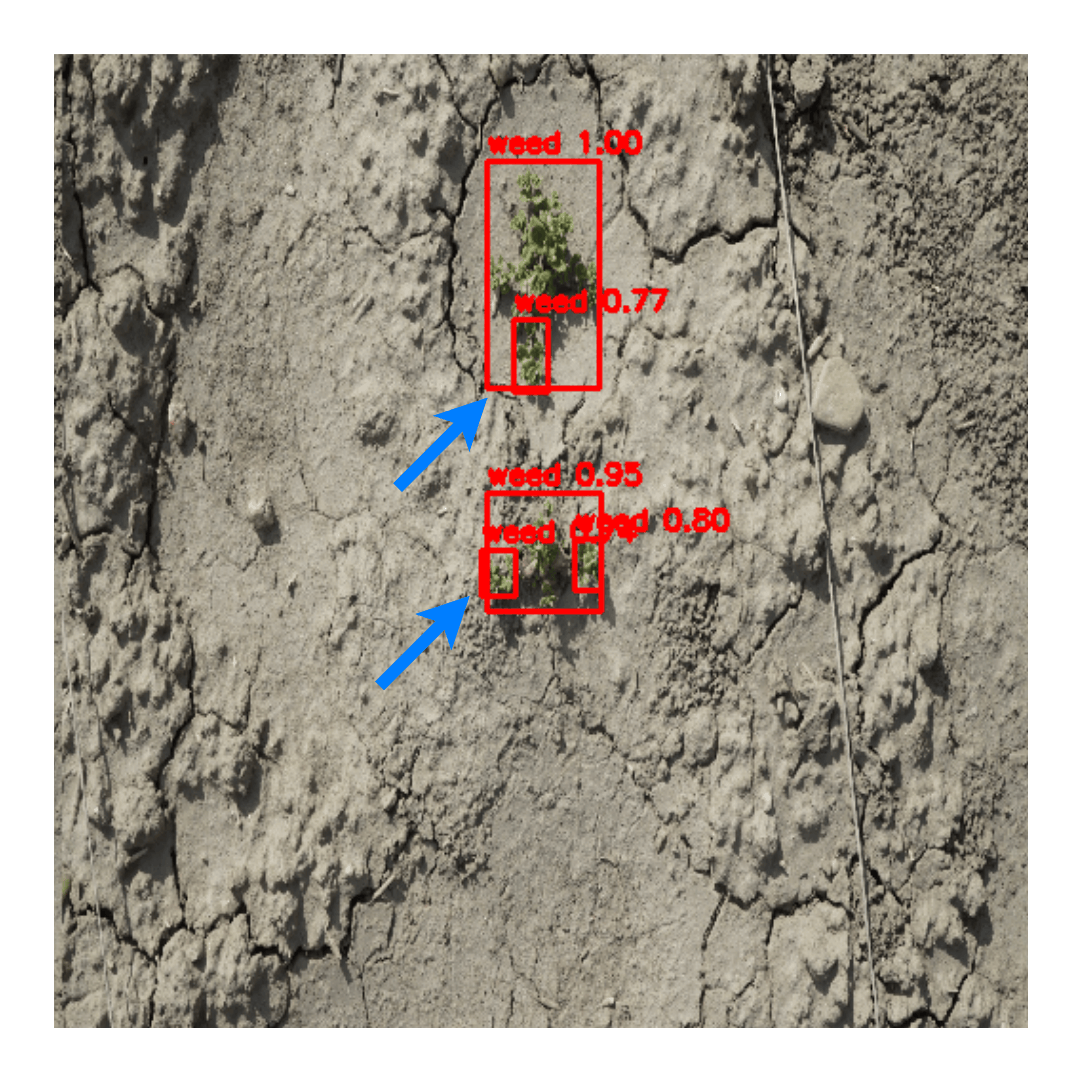
CropAndWeed Detection

detection ground truth AgriMAE feature detection AgriMAE pixel detection MAE detection
Left to right: ground truth · AgriMAE (feature) · AgriMAE (pixel) · MAE

BibTeX

If you find this work useful, please cite:

@inproceedings{tzouras2026agrifield, title = {AgriField-40K: Adapting Vision Models to Agriculture With Efficient Continual Pretraining}, author = {Tzouras, Vasileios and Pegios, Paraskevas and Nalpantidis, Lazaros}, booktitle = {Proceedings of the European Conference on Computer Vision (ECCV) Workshops}, year = {2026} }